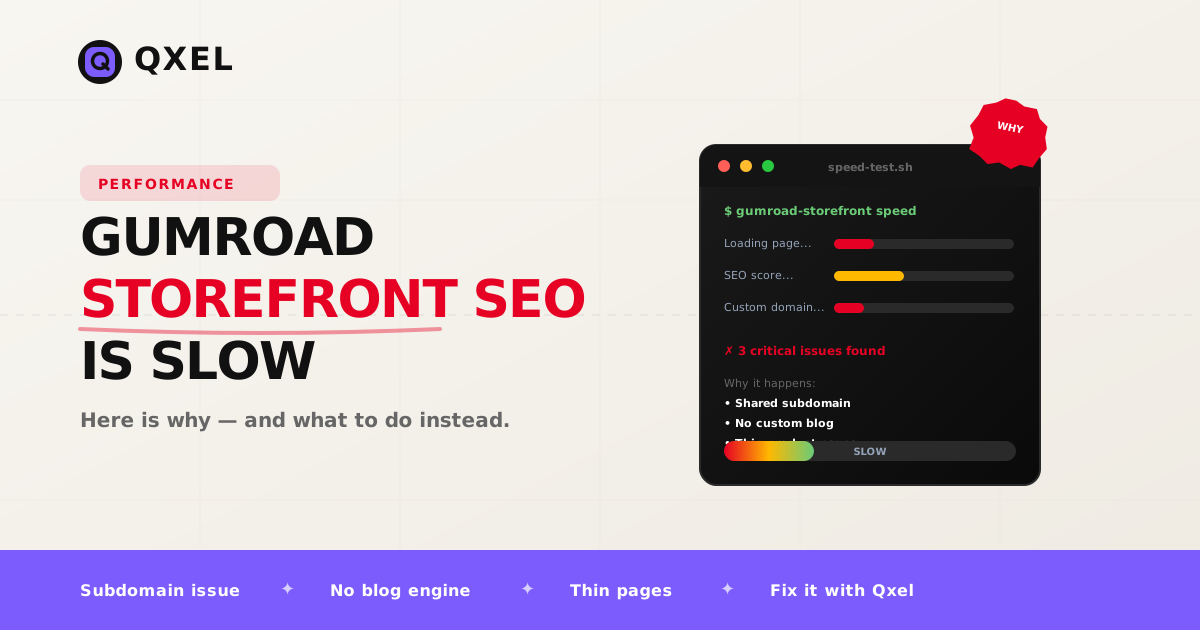
gumroad storefront seo is slow
Published on September 1, 2026 · by Sameem, CEO
Gumroad Storefront SEO Is Slow. Here's Why.
If you've ever wondered why your Gumroad storefront isn't showing up well in search results, it isn't necessarily because you did something wrong.
In many cases, the problem is much simpler:
There isn't enough content on the storefront for search engines to crawl, understand, and rank.
A typical digital-product storefront can be very small.
You might have a product title, a short description, a few images, a price, and a checkout.
That's enough for a customer who already knows what they're looking for.
But from an SEO perspective, that's not a lot of information.
More Content Gives Search Engines More Context
Search engines need context.
If your storefront has only a handful of pages with limited text, there are fewer opportunities for those pages to match different searches.
Imagine you sell a video-editing template.
Your product page might target something like:
"Video editing template"
But potential customers could be searching for much more specific things:
- "Premiere Pro template for short films"
- "cinematic video editing workflow"
- "how to organize a short film edit"
- "best editing templates for filmmakers"
- "how to create cinematic transitions"
Your single product page may not naturally cover all of those topics.
This is where additional content becomes useful.
The more useful, relevant content you have around your products, the more context search engines have about what your storefront is actually about.
Backlinks Help. But There's a Catch.
Backlinks are still an important part of SEO.
Getting other websites to link to your storefront can help build authority and discoverability.
But there's a simple question worth asking:
Where are those backlinks pointing?
If every backlink leads to a storefront with only a few thin product pages, you're sending authority toward a destination that doesn't contain much information.
A backlink isn't magic.
It doesn't automatically make a page useful.
If the destination has very little content, you may be putting significant effort into acquiring links without giving search engines much more to understand.
More Backlinks Isn't Always the First Answer
When a storefront isn't ranking, the immediate SEO reaction is often:
"Get more backlinks."
But before doing that, look at the storefront itself.
- Does it have enough content?
- Does it answer questions related to the products?
- Are there pages targeting different search intents?
- Can someone discover the storefront even if they aren't directly searching for the product name?
If the answer is mostly no, building more backlinks may not be the best first move.
You may need to build the destination before trying to build authority for it.
This Is Where Storefront + Blog Makes Sense
A storefront doesn't have to contain only product listings.
It can also contain useful content around those products.
For example, instead of having only a page selling a filmmaking template, you could publish articles about filmmaking workflows, editing, production resources, and other topics relevant to your audience.
Now your storefront has more than product information.
- It has context.
- It has pages that can rank for different searches.
- It has content that people can discover organically.
And those blog posts can naturally lead readers back to your products.
This also creates more useful destinations for backlinks.
Instead of every external link pointing directly to a product page, different websites can reference different articles, guides, resources, and product pages across your storefront.
The Bigger Picture
SEO isn't simply about getting people to link to your website.
It's about making the destination worth discovering.
If your storefront contains very little information, there are only so many ways search engines can understand and surface it.
Adding relevant content gives them more to work with.
Backlinks can then strengthen that content.
So if your digital storefront is struggling with SEO, there are two obvious directions:
- Create more useful content around your products.
- Then build authority around that content.
Or, even better, choose a storefront where you can do both from the beginning.
Your storefront shouldn't have to be just the place where someone buys your product.
It can also be the place where they discover you in the first place.